

Can you really reprogram your mind to achieve your goals or overcome obstacles—simply by harnessing self-hypnosis suggestion techniques? The idea of transforming habits, boosting confidence, or releasing stress without expensive sessions piques curiosity. This guide unravels how self-hypnosis moves beyond myth into a practical strategy you can start today. Whether you want to quit smoking, lose weight, or finally conquer sleep troubles, we cover effective, research-backed methods to help you take charge of your subconscious. If you’re ready to unlock the power of your mind from the comfort of your home, read on.
Unlocking the Mind: Why Explore Self-Hypnosis Suggestion Techniques?
Exploring self-hypnosis suggestion techniques opens a pathway to self-directed change and enhanced well-being. Unlike traditional therapy, self-hypnosis lets you access your subconscious on your own schedule, empowering you to tackle challenges like physical pain or low self-confidence privately and safely. Imagine replacing the inner critic with supportive self-talk, or losing anxious habits by simply dedicating a few quiet minutes each day. These techniques deliver practical, science-backed results by combining hypnotic induction, focused attention, and affirmations in the present tense. From guided sessions for deep relaxation to targeted goals like losing weight or overcoming addictive urges, self-hypnosis provides a customizable toolset for anyone seeking personal growth. You don’t need clinical hypnosis credentials—only curiosity, patience, and the willingness to follow proven steps.
With self-hypnosis suggestion techniques, you become both the guide and explorer. As you learn hypnotic suggestions, hypnotic induction, and the art of eye fixation, you’ll notice how simple, positive statements can bypass the conscious mind and anchor new habits deep within. This article breaks down the principles and rules, reveals the modern science, and offers troubleshooting tips—so you feel prepared and confident every step of the way. Dive in for practical strategies you can apply tonight and see how far a few minutes of focused attention can take you.

Have you ever wondered if you can truly reprogram your mind for success—or if self-hypnosis suggestion techniques are the key to achieving your goals?
The potential to consciously shape your inner narrative is both intriguing and empowering. Self-hypnosis techniques have become a bridge, connecting science-supported practices with the everyday quest for happiness, productivity, and resilience. If you’ve struggled to change habits or boost motivation, self-hypnosis may hold the missing link.
What You’ll Learn About Self-Hypnosis Suggestion Techniques
- Core principles of self-hypnosis suggestion techniques
- How to use hypnotic suggestion and hypnotic induction
- Essential rules for effective hypnotic suggestions
- Practical step-by-step guide for beginners
- Expert insights into achieving your goals with present tense affirmations
- Troubleshooting common issues
Understanding Self-Hypnosis Suggestion Techniques
What Are Self-Hypnosis Suggestion Techniques?
Self-hypnosis suggestion techniques are practical, repeatable methods you use to enter a relaxed state—often called a hypnotic state—where your mind is highly focused and your subconscious becomes more receptive to positive changes. Unlike stage hypnosis or clinical hypnosis sessions run by a professional, you become your own hypnotist, using verbal or mental cues to guide yourself towards relaxation and targeted goals. These techniques blend elements like hypnotic induction (relaxing mind and body), eye fixation (focusing attention), and formulating clear hypnotic suggestions. When practiced consistently, they can help reinforce healthier habits, reduce physical pain, manage stress, and even help you stop smoking or lose weight—without costly hypnosis courses. The power lies in intentionally bypassing your conscious mind’s critical filter, so your suggested affirmations take root more effectively.
Effective hypnotic suggestions aren’t magic—they’re structured in a way that communicates with the subconscious: present tense, positive, specific, and personally meaningful. The process often begins in a calm environment, sitting comfortably with legs and feet uncrossed, and deep, steady breaths that guide you towards a receptive mental state. Once you reach focused attention (a hallmark of the hypnotic state), you introduce suggestions that align with your goals. This foundational understanding forms the bedrock for long-term personal change, empowering you to direct your own growth, resolve anxieties, or reinforce constructive habits at your own pace.

History and Development of Hypnotic Suggestion
The journey of hypnotic suggestion stretches back centuries, yet its modern form took shape in the 19th century with James Braid, who coined the term “hypnosis” and identified eye fixation as a core technique. He recognized that deep trance states could be induced by concentrating on a fixed point, thus narrowing mental focus and opening the door to suggestion. Over time, others like Milton Erickson further refined hypnotic induction and personalized, conversational approaches to achieving a highly focused, receptive mind. From early mysticism to today’s neuroscience-backed approaches, our understanding has evolved—but the principles remain rooted in relaxing the mind, focusing attention, and leveraging direct suggestions. Modern research now confirms that certain brainwave states (alpha and theta) enhance suggestibility and that present tense affirmations can anchor new beliefs and behaviors more readily. Today, self-hypnosis suggestion techniques blend this historical wisdom with practical steps you can follow at home, without needing a professional hypnosis session.
The rise of hypnosis courses and clinical hypnosis over the past decades has brought hypnotic suggestion into mainstream well-being and personal development fields. While initial skeptics doubted the method, clinical research now recognizes hypnotic states as genuine altered states of consciousness—where external events fade away and the subconscious mind becomes primed for change. Whether you’re aiming to stop smoking, overcome a large meal habit, or simply feel more confident, the progression from historical curiosity to evidence-based tool has amplified self-hypnosis’ reach and effectiveness.
Key Concepts: Hypnotic Suggestion, Hypnotic Induction, and Eye Fixation
To effectively use self-hypnosis suggestion techniques, understanding the foundational terms is crucial. Hypnotic induction is the process of guiding yourself (or another person) into a relaxed state of heightened focus—often through deep breathing, progressive relaxation, or focused attention. Hypnotic suggestion refers to the statements or affirmations you introduce during or after this induction to plant desired beliefs, habits, or attitudes in the subconscious. Eye fixation is a common technique where you concentrate your gaze (on a spot, object, or pendulum), helping “zone out” external events and move deeper into the state of hypnosis. When combined, these components create a powerful, stepwise approach for achieving your goals through self-directed change. Beginners typically start with sitting comfortably (with legs and feet uncrossed), closing their eyes, and following a sequence of mental and physical relaxation exercises before repeating positive suggestions phrased in the present tense. This consistent ritual not only makes hypnosis session more effective but also accelerates habit formation and lasting change.
The synergy among hypnotic induction, suggestion, and eye fixation forms the core of most self-hypnosis techniques. By fully engaging your conscious mind in a repetitive focal task (like staring at a point on the wall while breathing deeply), you gradually “switch off” analytical thinking and let the subconscious become highly receptive. This is what allows positive, well-structured suggestions to bypass internal resistance and embed themselves more easily. Whether your goal is to quit smoking, manage physical pain, or simply feel more relaxed after a large meal, these tried and tested concepts unlock the mind’s potential for genuine transformation.
While mastering these foundational elements is essential, many people are curious about how self-hypnosis compares to other mind-body practices. If you’re interested in understanding the distinctions and overlaps between self-hypnosis and meditation, explore this in-depth comparison of hypnosis vs meditation to see which approach best fits your personal growth journey.
How Self-Hypnosis Suggestion Techniques Work
Mechanisms of Hypnotic Suggestion
Hypnotic suggestion works by creating a “bridge” between your conscious mind and subconscious through a series of mental cues and physical relaxation steps—often involving eye fixation and focused attention. The goal is to quiet the internal chatter and enter a receptive, trance-like state. Once there, affirmations and suggestions—such as “I feel calm and confident in social situations” or “Every day, I choose healthy foods to lose weight”—are more readily adopted and internalized. Key to this process is using clear, actionable phrases in the present tense, so the subconscious mind regards them as reality instead of idle wishful thinking. Through repetition and emotional investment, these suggestions become scripts that influence behavior, beliefs, and even physiological responses, like reducing physical pain or alleviating the bloated feeling after a large meal.
Scientific studies highlight that hypnotic induction shifts the brain’s electrical activity into alpha and theta waves, representative of deep relaxation and high suggestibility. During this period, external events and distractions fade, and the mind becomes less critical—ideal for introducing change-oriented commands. Eye fixation helps “lock in” this state, while repetition and specificity anchor new attitudes and habits, such as more mindful eating to avoid overeating or affirming “I open my eyes and feel energized for the day” upon waking. The structured ritual of hypnotic suggestion matches your natural rhythms, making it easier to integrate into daily routines and to achieve your goals over time.

The Science: Brainwaves and Present Tense Affirmations
Recent neuroscience research sheds light on how self-hypnosis suggestion techniques actually influence the brain. When you enter a hypnotic state—usually via deep breathing, eye fixation, or relaxation—you shift from the fast, alert beta brainwaves to slower alpha and theta waves. These “relaxed state” waves are associated with increased creativity, suggestibility, and the ability to change ingrained patterns. In this state, present tense affirmations (“I am confident,” “I sleep deeply every night”) are most effective, as the subconscious doesn’t recognize future or hypothetical phrasing. It accepts what’s delivered in the now, making present-tense language fundamental to long-lasting impact.
Moreover, clinical hypnosis and modern imaging studies indicate the brain exhibits heightened connectivity and lowered critical interference during trance or hypnotic states. This means your conscious mind’s skepticism temporarily fades, letting positive suggestions reach the deeper mind without debate. Hypnotic suggestions, especially when combined with visualization, can activate brain regions involved in motivation and behavior change—making it easier to quit smoking, manage stress, or feel more confident. **Consistency**—repeating these affirmations daily—further strengthens the neural pathways connected to your desired behavior, eventually making the new response automatic and natural.
“Self-hypnosis is not just wishful thinking—it's a structured method to influence subconscious patterns.” – Leading Clinical Hypnotherapist
Step-by-Step Guide: Self-Hypnosis Suggestion Techniques for Beginners
- Preparation: Creating the Ideal Environment
- Hypnotic Induction: Deepening Focus and Eye Fixation
- Crafting Effective Hypnotic Suggestions
- Using Present Tense and Positive Language
- Anchoring Your Suggestions for Lasting Change
- Returning to Full Awareness
1. Preparation: Creating the Ideal Environment — To get started with self-hypnosis suggestion techniques, choose a quiet space free from distractions. Sit comfortably, ensuring your legs and feet are uncrossed and your clothing isn’t tight. Lower the lights and settle in—relaxation is crucial, so a familiar scent, soft background sound, or a favorite blanket can cue your mind that it’s time for a positive reset. Many find a modern meditation corner with gentle lighting and supportive elements helps signal a moment of focused attention. Close your eyes or fix your gaze on a relaxing object. Take a deep breath and exhale slowly, releasing tension with each breath. This not only starts the journey into a hypnotic state but also lets go of external events and worries.
2. Hypnotic Induction: Deepening Focus and Eye Fixation — Guide yourself into a relaxed state through deep breathing and progressive muscle relaxation, moving focus from your feet up to your head. Eye fixation can help: choose a spot on the wall, a candle, or a gentle pendulum, and focus your gaze. As your mind narrows to this point, internal chatter fades. Count backward slowly from 10 to 1, imagining yourself sinking deeper with every number—a classic technique used by professionals in clinical hypnosis and hypnosis courses alike. Notice sensations in your body such as the warmth of the sun or the softness below your legs and feet.
3. Crafting Effective Hypnotic Suggestions — Begin introducing positive, goal-aligned hypnotic suggestions. These should always address what you want to achieve (not what you want to avoid) and are most effective when structured in the present tense. Examples: “I am a non-smoker,” “I calmly choose healthy portions at every meal,” or “I feel strong and motivated when I wake each morning.” The subconscious mind absorbs statements presented as if they are already true.
4. Using Present Tense and Positive Language — Avoid phrases like “I will…” or “I want to…”; instead, anchor your suggestions as current realities. If you wish to lose weight, your affirmation might be, “I enjoy nourishing foods and feel light in my body.” For reducing anxiety: “I am calm and confident in social situations.” This principle, reinforced by experts such as Milton Erickson, leverages your brain’s natural wiring to interpret only what’s phrased in the present.
5. Anchoring Your Suggestions for Lasting Change — Repeat your chosen hypnotic suggestions several times. Imagine the outcome as vividly as possible—what will you hear, see, and feel? The more you engage your senses and emotions, the better the results. This is the key “anchoring” process, helping the suggestions stick in your subconscious.
6. Returning to Full Awareness — When you feel ready, mentally count up from 1 to 5, telling yourself that you will open your eyes, stretch, and feel clear-headed. Take another deep breath and notice how relaxed and alert you feel—aware of your surroundings and ready to carry your new mindset into daily life.

Examples of Hypnotic Suggestions for Everyday Situations
Sample Suggestions to Achieve Your Goals
- Quitting smoking with self-hypnosis suggestion techniques
- Boosting self-confidence through hypnotic suggestions
- Improving sleep with hypnotic induction methods
Everyday life offers countless opportunities for self-directed change using self-hypnosis techniques. Here are a few examples:
If you are determined to stop smoking, try the suggestion: “I am a non-smoker and my body feels cleaner every day.” For losing weight: “I make healthy choices and feel light after every meal.” To overcome sleeplessness: “I fall asleep easily and sleep deeply every night.” For confidence: “I am comfortable speaking in groups and enjoy social connections.” By repeating these suggestions in a relaxed state daily, you align your habits with your goals—no hypnosis session or clinical hypnosis connection required.
In the context of managing stress or physical pain, try statements like, “With each deep breath, my discomfort eases and my body relaxes,” or “I navigate external events with calm and clarity.” Even simple phrases such as, “I am aware of my surroundings and feel grounded,” help reinforce mindfulness and centeredness throughout your day. Customize each suggestion to your unique needs and always phrase in the present tense.

Crafting Powerful Hypnotic Suggestions
The Role of Present Tense in Hypnotic Suggestion
The present tense is the secret sauce in all effective hypnotic suggestions. Why? The subconscious mind tends to accept what is expressed as reality, ignoring future intentions or “wishes.” If you say, “I am becoming more confident,” you signal progress rather than an unreachable ideal; but “I will be more confident” can leave you perpetually striving. For this reason, all hypnotic suggestions—whether for losing weight, stopping smoking, or managing a large meal—should be written and voiced as if the transformation has already occurred. This approach encourages the mind to internalize the change, manifest new habits, and discard unhelpful patterns.
Experts in clinical hypnosis and personal development, including Milton Erickson, agree: using present-tense affirmations coupled with sensory details creates mental “evidence” your mind is more likely to accept. For example, “I wake up rested every day,” instead of “I want to sleep better.” This technique helps bridge the gap between intention and lasting change, making your self-hypnosis session more powerful and personally meaningful.

Structuring Affirmations for Optimal Results
A well-structured hypnotic suggestion is concise, positive, personally relevant, and presented in the present tense. Avoid negatives (“I don’t eat junk food”)—instead use positives (“I choose wholesome foods at every meal”). Tie the affirmation directly to your desired outcome: “I feel energized after a good night’s sleep.” Use clear, vivid language, and, when possible, include sensory elements: “I enjoy the warmth of the sun as I exercise each morning.” Repeat your chosen phrases during your relaxed state, visualizing yourself experiencing the success you want. Over time, this reshapes the scripts running in your subconscious, supporting everything from improved self-confidence to healthier eating and lifestyle patterns.
To further anchor your suggestions, connect them to triggers in your routines. For instance, after brushing your teeth, say, “I make excellent choices for my health today.” Or, before opening your eyes each morning, affirm: “I am focused and ready to achieve my goals.” Regular reinforcement ensures each hypnosis session brings deeper integration, eventually making the change automatic and sustainable.
Common Mistakes When Formulating Suggestions
Many people unintentionally limit the impact of hypnotic suggestion by using weak language, negatives, or vague intentions. Mistakes include: using future tense (“I will lose weight”), phrasing goals vaguely (“I want to feel better”), or focusing on what they wish to avoid (“I don’t want to feel bloated after a large meal”). Additionally, stacking too many suggestions at once can dilute effectiveness. To maximize results, stick to one or two focused affirmations per session, keep phrasing in the present tense, and always frame statements in the positive. If you notice plateaued results, revisit your language for clarity and conviction—and revisit your environment and relaxation method to ensure you’re reaching a genuine hypnotic state each time.
Remember, your subconscious mind craves clarity, repetition, and personal connection. Experiment with word choice, emotional tone, and even the order of your affirmations to find what resonates most deeply during your hypnosis session. As your skill grows, you’ll be able to troubleshoot and refine for even more significant transformation.
Review of the Most Effective Self-Hypnosis Suggestion Techniques
Top Techniques Backed by Research
| Technique | Description | Best Use Case |
|---|---|---|
| Eye Fixation | Focused gaze to deepen trance | Stress relief |
| Progressive Relaxation | Systematic muscle relaxation throughout the body | Insomnia |
| Visualization | Imagining your desired outcome with all senses | Motivation |
| Direct Suggestion | Simple, clear commands presented in present tense | Habit change (e.g., stop smoking, lose weight) |
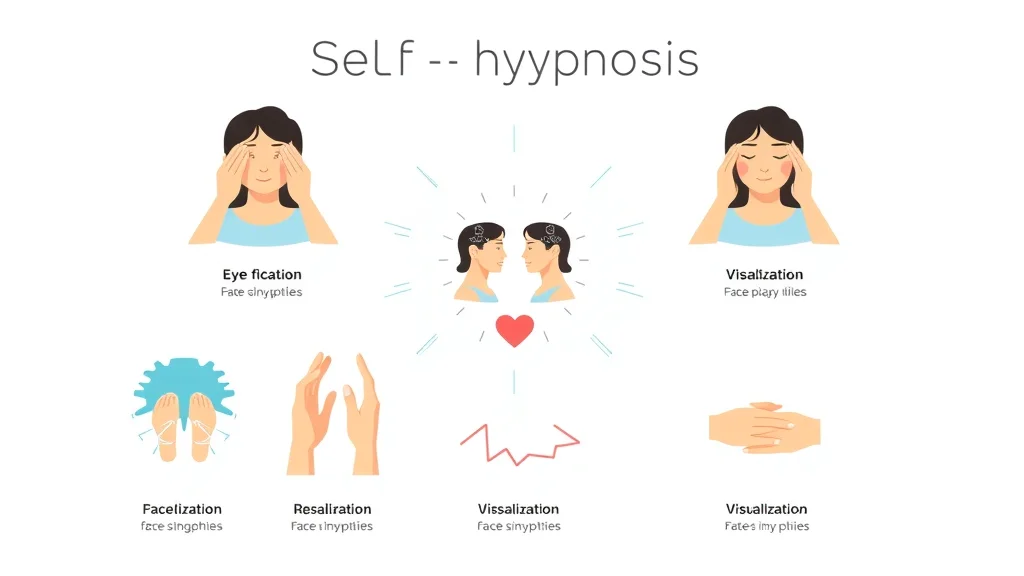
These self-hypnosis suggestion techniques are proven effective by both research and real-world applications. Eye fixation helps induce a deep trance quickly, progressive relaxation is highly useful for sleep disorders and anxiety, visualization transforms intentions into vivid mental “rehearsals,” and direct suggestion cements specific outcomes into the subconscious. Combining these methods—especially with present tense affirmations—supports rapid progress and long-term behavior change, whether you’re looking to lose weight, boost confidence, or manage external events with composure.
Many users find that combining multiple techniques in their hypnosis session yields the best results: starting with progressive relaxation, using eye fixation for initial induction, then introducing direct, sensory-rich suggestions aligned with the day’s goals. Keeping your approach flexible lets you adapt to what works best for you, ensuring your practice remains engaging and results-oriented.
Rules of Suggestion in Hypnotherapy
Foundational Rules of Hypnotic Suggestion
There are several universal rules to ensure your self-hypnosis suggestion techniques are as effective as possible. First, state each suggestion in the present tense—this creates immediacy and clarity for the subconscious. Use only positive language, focusing on what you want, not what you want to avoid. Aim for concrete, actionable, and personally meaningful suggestions; specificity matters. Repetition is key: repeat your chosen affirmations consistently, ideally in the same calm environment for each session. Finally, engage as many senses as possible during your hypnosis session for multi-layered impact.
Avoid “negative anchors”—for example, saying “I don’t want to feel bloated after a large meal” keeps that sensation present in your mind. Instead, try “I feel light and comfortable after eating.” Consistent adherence to these fundamental rules accelerates habit formation and ensures your hypnotic suggestions achieve your goals reliably and efficiently.
How to Apply These Rules with Self-Hypnosis Suggestion Techniques
To apply these foundational rules, begin each self-hypnosis session with focused intent. Decide on one or two changes you wish to see and formulate clear, positively framed affirmations using the present tense. Sit comfortably, feet uncrossed, and deepen your awareness with steady breathing or progressive relaxation. Introduce your selected suggestions with confidence and emotional investment. If needed, write your affirmations on a sticky note and keep them by your meditation corner as a visual cue. Return to the same statements repeatedly, both in and out of your hypnosis routine, to reinforce them further.
Over time, you’ll internalize these rules and start to notice how quickly new habits take root, whether it’s improved self-confidence, healthier eating, or less reactive responses to stressful external events. Experiment, review, and adjust your suggestions as you grow more attuned to your subconscious and its preferences. Self-hypnosis suggestion techniques empower you to be the architect of your own change—one affirming statement at a time.
Integrating Self-Hypnosis Suggestion Techniques into Your Daily Routine
Habit Formation with Hypnotic Suggestions
The true power of self-hypnosis suggestion techniques lies in daily, consistent use. By weaving a brief hypnosis session into your morning or evening routine, you condition the subconscious to expect and accept regular positive reinforcement. Use the same comfortable spot, same order of techniques—start with deep breathing or eye fixation, introduce your chosen suggestions—and treat it like brushing your teeth: a non-negotiable act of self-care.
Pairing self-hypnosis with existing habits—right after waking up, at bedtime, or after a meal—cements the behavior. Write your affirmations in a journal, set reminders, or use a calming meditation app to “cue” your mind. Over days and weeks, these small rituals add up, making it easier to break old patterns (like a smoking habit or emotional eating), and reinforce new ones aligned with your personal goals. As you continue, you’ll notice you can enter a relaxed state more quickly, and that your responses to external events gradually shift without conscious effort.

Tracking Your Progress: Tools and Tips
To ensure your self-hypnosis suggestion techniques deliver results, track your experience and outcomes in a dedicated journal or digital tracker. Document the suggestions you use, your mood and focus level before and after each hypnosis session, and any shifts in behavior or mindset. Over time, look for patterns: Do some suggestions yield faster results? Do you achieve your goals more readily at specific times of day? Use colored pens, stickers, or habit-tracking apps for extra motivation.
If you’re tackling long-term goals—like losing weight, quitting smoking, or overcoming physical pain—set milestones and review them weekly. Adjust your suggestions as clarity increases. Celebrate small wins! Over weeks and months, consistent tracking not only reinforces your commitment but provides valuable feedback for future sessions. If desired, partner with a supportive friend or wellness coach for added accountability. Remember: Every success, no matter how incremental, moves you closer to mastering self-hypnosis suggestion techniques.
Troubleshooting: When Self-Hypnosis Suggestion Techniques Don’t Work
Common Barriers to Effective Hypnosis
Not everyone finds immediate success with self-hypnosis suggestion techniques. The most common stumbling blocks include struggling to enter a relaxed state, formulating suggestions that are too vague or future-oriented, or skipping sessions. Internal resistance—your conscious mind’s skepticism—can also sabotage results, as can trying to rush the process or stack too many suggestions at once. External events (like noise, interruptions, or stress) may further disrupt focus.
Some individuals notice discomfort or distraction (tight clothing, crossing legs and feet, physical pain, feeling bloated after a large meal) that pulls them out of the relaxed state. Or, a lack of belief in the process itself undercuts its effectiveness. Be patient—just like learning meditation or a new instrument, the practice of entering a deep trance and embedding hypnotic suggestions takes gradual, stepwise improvement. Consistency and willingness to adjust approach are vital for long-term results.

Solutions and Adjustments for Better Results
To boost your success with self-hypnosis suggestion techniques, start with shorter sessions, using only one or two affirmations at first. Double-check that your suggestions are clear, phrased in the present, and evoke positive emotions tied to your goals—such as “I am confident meeting new people” instead of “I avoid feeling anxious.” Adjust your physical environment: loosen tight clothing, sit with legs and feet uncrossed, and ensure you feel fully supported and safe.
If a particular method, such as eye fixation or progressive relaxation, doesn’t work for you, experiment with alternatives. Some people find guided audio recordings or background music help maintain focus. If results stall, revisit your commitment: are you practicing daily? Are you ready to believe you can achieve your goals? Celebrate every small success and give yourself time—the more you practice, the more natural each hypnosis session will feel and the greater the long-term outcomes.
Expert Opinions: What Makes Hypnotic Suggestion Effective?
“A well-formulated hypnotic suggestion is the bridge between intention and change.” — Certified Hypnotherapist
Expert practitioners agree: lasting transformation demands clarity, repetition, and present-tense affirmations. Hypnotic suggestion leverages the brain’s openness during relaxed, trance-like states, making it possible to rewrite unhelpful beliefs or habits. Combining specific language, daily practice, and emotional investment is what makes self-hypnosis suggestion techniques powerful, accessible, and uniquely tailored to your needs.
Whether you’re targeting big goals—like quitting smoking—or small improvements, such as getting better sleep, taking the rules and principles explained by professionals ensures your efforts yield the most impact. For many, this self-directed journey complements and even enhances results from professional hypnosis session support.
Comparing Self-Hypnosis Suggestion Techniques to Professional Hypnotherapy
Benefits and Limits of DIY Hypnotic Suggestions
The main advantage of self-hypnosis suggestion techniques is accessibility: you can practice anywhere, anytime, and tailor every session to your comfort level and specific goals. No clinical hypnosis appointment or hypnosis courses are necessary for effective, consistent improvement. For most day-to-day habits—like eating, sleep, or stress management—DIY suggestions offer autonomy and privacy. However, certain deep-rooted behaviors or traumatic patterns may require the guidance of a certified hypnotherapist, especially if you are struggling to enter a deep trance or see measurable results.
Self-hypnosis is excellent for reinforcing new routines, such as keeping legs and feet uncrossed during relaxation, or addressing manageable issues like wanting to feel less bloated or more present in everyday life. But for complex challenges, such as persistent physical pain, trauma, or longstanding anxiety, professional help ensures safety, deeper exploration, and a wider variety of advanced techniques.
When to Seek a Professional for Hypnotic Induction
If after several weeks of daily self-hypnosis suggestion techniques you see little improvement, or if you experience distressing emotions or memories, consider seeking a professional. Certified hypnotherapists are trained to handle challenging cases and to tailor hypnotic induction to your unique mental landscape. If your goal is medical or psychological—such as overcoming physical pain, severe insomnia, or addiction—professional support brings added skill, safety, and accountability to the process.
Remember, self-hypnosis is a powerful complement, not always a replacement, for expert care. If in doubt, consult with a mental health provider or a licensed hypnotherapist who can guide your practice for optimal outcomes.
Watch an accessible, step-by-step demonstration of creating a calm environment, practicing hypnotic induction, and repeating affirmations in the present tense. Dynamic camera angles and clear narration highlight best practices for beginners and advanced users alike.
People Also Ask: What are Examples of Hypnotic Suggestions?
Answer: Common examples of hypnotic suggestion include statements like “I feel calm and confident in social situations,” “Every day, I become more focused,” and “I sleep deeply every night.” Effective hypnotic suggestions are phrased in the present tense and focus on positive outcomes for achieving your goals.
People Also Ask: What are Self-Hypnosis Techniques?
Answer: Self-hypnosis techniques typically include methods such as guided relaxation, deep breathing, visualization, eye fixation, and repeating hypnotic suggestions. Each uses hypnotic induction to achieve a receptive mental state.
People Also Ask: What is the Most Effective Hypnosis Technique?
Answer: The most effective hypnosis technique varies by individual. However, eye fixation combined with present tense hypnotic suggestions is widely regarded as highly effective, as is progressive muscle relaxation paired with clear affirmations.
People Also Ask: What are the Rules of Suggestion in Hypnotherapy?
Answer: The rules include using positive language, present tense, specificity, and repetition. Suggestions should be actionable and personally meaningful for the best results with self-hypnosis suggestion techniques.
Practical Self-Hypnosis Suggestion Techniques: Frequently Asked Questions
- Can everyone learn hypnotic induction?
- Is eye fixation necessary for self-hypnosis?
- How long does it take to see results from self-hypnosis suggestion techniques?
Key Takeaways: Mastering Self-Hypnosis Suggestion Techniques
- The core elements of effective self-hypnosis suggestion techniques involve hypnotic induction, clear hypnotic suggestions, and present tense affirmations.
- Eye fixation and crafted language play essential roles in achieving your goals through hypnosis.
- Consistency, positive framing, and personal relevance enhance outcomes.
Ready to Transform? Start Practicing Self-Hypnosis Suggestion Techniques Today
With structured practice and present-tense affirmations, you have the tools to reprogram your subconscious, break unhelpful habits, and achieve your goals. Begin your self-hypnosis journey now for measurable, lasting change.
Conclusion: Embracing Self-Hypnosis Suggestion Techniques for Personal Growth
Integrate these techniques daily, focus on clarity and present tense, and you’ll unlock a new level of self-directed growth—one positive suggestion at a time.
If you’re inspired to deepen your understanding of mind-body practices and want to expand your toolkit beyond self-hypnosis, consider exploring how meditation and hypnosis differ in their approach to mental transformation. Gaining insight into the unique benefits and applications of each can help you tailor your personal development strategy for even greater results. For a comprehensive look at the science, techniques, and practical uses of both, discover the key differences between hypnosis and meditation here and unlock new pathways to self-mastery.




Write A Comment